
Responding to a statutory inquiry is not a straightforward information governance task. It is a high-stakes, legally consequential operation involving:
Decades of historical records — many paper-based, fragile, or handwritten — held across dozens of institutions in multiple local areas
Strict disclosure obligations governed by the Inquiry’s Protocol on Disclosure of Documents and Protocol on Restriction Orders, Redaction and Anonymity
Chain of custody requirements that must withstand legal scrutiny throughout the Inquiry’s lifetime and beyond
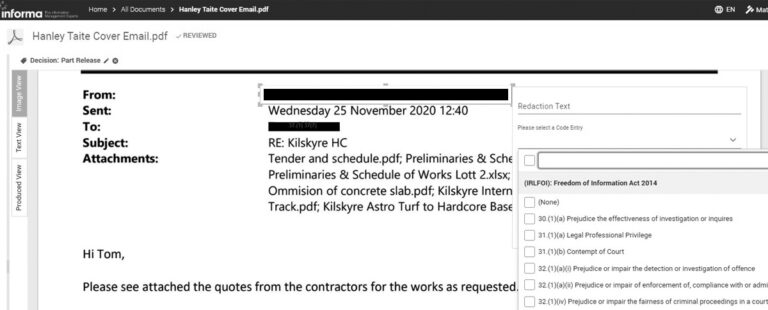
Sensitive victim and survivor information requiring precise, defensible redaction and pseudonymisation
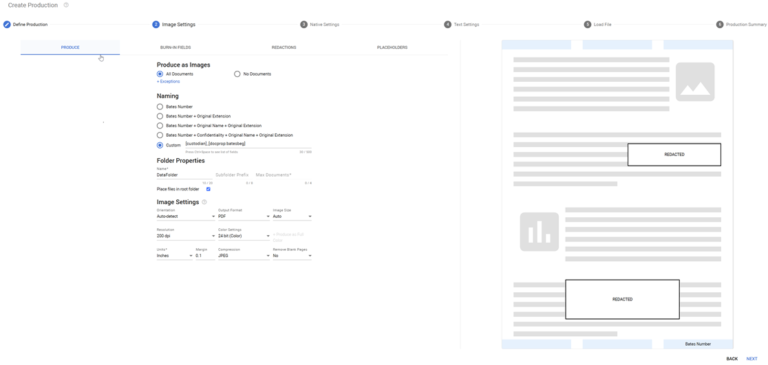
Hearing bundle production aligned to multiple investigative strands, parties, and events
Data protection obligations under UK & IRE GDPR, operating in parallel with the Inquiry’s own restriction and anonymity frameworks
For Government Departments local authorities, police forces, healthcare, and other responding bodies, the obligation to locate, preserve, digitise, review, redact, and disclose relevant records will place significant operational and legal demands on already-stretched teams.
Figuring out the scope of a request for complex disclosures (SAR, FOI, DSAR, etc.), litigation support, or internal investigations gets a lot easier when you understand how it might affect people in your organisation based on your search results. Working with Informa and their technology gives you confidence that you’ve covered the right bases and asked the right questions along the way.
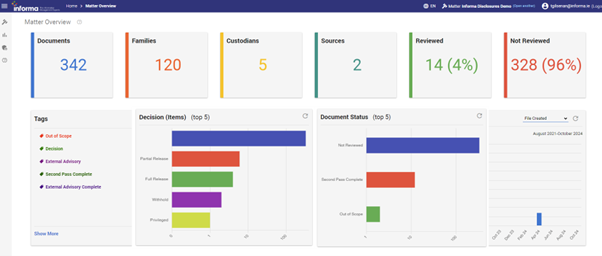
Informa has provided end-to-end document management and disclosure support with commissions of investigations, public and statutory inquiries.



 Call Us Now